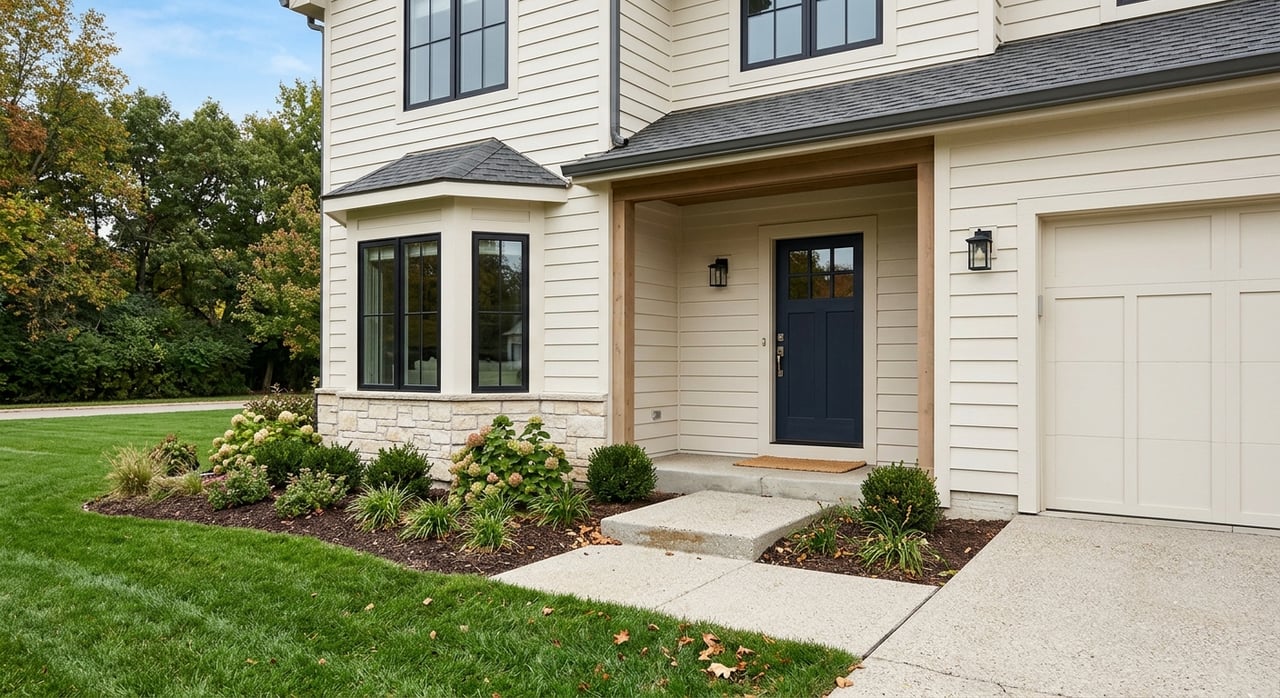
Wondering why two Millbrae homes can feel completely different even when they are only a few minutes apart? That is one of the most important things to understand before you buy or sell here. Millbrae is a compact city, but its home styles, street patterns, and day-to-day routines can shift a lot by pocket, and knowing those differences can help you make a smarter move. Let’s dive in.
Why Millbrae Feels So Varied
Millbrae covers just 3.25 square miles, yet it packs in several distinct residential patterns. The city describes itself as home to roughly 23,000 residents and as a major Peninsula transit hub, with BART, Caltrain, SamTrans, and airport connections centered around Millbrae Station.
That transit role matters, but so does the city’s underlying housing fabric. Millbrae planning documents show that residential neighborhoods remain the predominant land use, while higher-intensity growth is directed to the Station Area, Downtown, and the El Camino Real corridor.
In plain terms, Millbrae is not one single housing product. You will find older single-family neighborhoods, postwar tracts, hillside homes with more topographic character, and a more urban, transit-oriented core near downtown and the station.
Millbrae’s Main Housing Pattern
If you picture Millbrae as a classic Peninsula single-family city, that is mostly accurate. The general plan says most residential neighborhoods contain well-maintained single-family homes on 5,000-square-foot lots, with most homes being one- to two-story detached houses.
A lot of that housing dates back to the mid-20th century. The city’s 2023 to 2031 Housing Element says the largest share of Millbrae’s housing stock was built from 1940 to 1959, with 3,714 units from that era.
That age range helps explain the feel of many blocks. Across Millbrae, city design materials often describe surrounding homes as ranch-style or contemporary ranch-style, often with cross-hipped or cross-gabled roofs.
At the same time, Millbrae is not architecturally uniform. The lower Highlands is noted in the general plan for Spanish Mission character, while areas like Lomita Hills and Capuchino reflect post-World War II suburban development with gently curving streets that follow the terrain.
Downtown, Station, and El Camino Real
Best for transit-oriented living
If you want the most walkable, connected part of Millbrae, start here. City planning documents describe Downtown as the heart of the city, generally bounded by Victoria Avenue, Meadow Glen, Magnolia Street, and El Camino Real.
This pocket has a different feel from the city’s detached-home neighborhoods. Instead of a classic suburban tract pattern, you are more likely to see mixed-use and multifamily housing, smaller-scale commercial storefronts along Broadway, and quicker access to everyday errands and regional transit.
For some buyers, this area offers a more urban residential experience than the rest of Millbrae. For sellers, the value story here often centers on station access, convenience, and a lifestyle with shorter trips to shops and transit.
Why this pocket stands out
Millbrae Station is one of the city’s biggest differentiators. The city describes it as the largest intermodal center on the Peninsula, blending BART, Caltrain, SamTrans, airport connections, and broader regional access.
That kind of connectivity is not spread evenly across every part of town. If being close to transit is high on your list, the station-adjacent areas will likely feel very different from the hills to the west.
Bayside Manor and Marina Vista
Best for residential streets near transit
Bayside Manor and Marina Vista sit in the northwestern part of Millbrae. The Active Transportation Plan specifically names them as neighborhoods separated from Downtown and the station by the Caltrain and BART tracks.
That separation shapes the feel. These pockets can offer a more residential street pattern while still keeping you relatively close to the station compared with farther-in hillside neighborhoods.
Bayside Manor Park is within walking distance of the BART and Caltrain station, according to the city’s Active Transportation Plan. Marina Vista Park sits at the end of Spruce Avenue on Bay Street, adding another everyday outdoor amenity that helps define this side of town.
What buyers and sellers should notice
For buyers, this area can be appealing if you want a neighborhood setting without giving up station access entirely. For sellers, the strongest talking points are often practical: proximity to transit, nearby parks, and a location that bridges residential living with commute convenience.
Green Hills and Lomita Park
Best for classic neighborhood feel
Green Hills and Lomita Park read more like traditional neighborhood pockets than transit-first districts. The city’s planning map labels both areas, and Green Hills Park at Magnolia Avenue and Ludeman Lane helps anchor this part of Millbrae with open lawns, tree-filled terraces, and a playground.
This section of town fits what many people picture when they think of Millbrae: established residential blocks, single-family homes, and a daily rhythm shaped more by neighborhood streets and parks than by station activity.
If you are comparing micro-neighborhoods, this is a useful middle ground. It is not as urban as downtown, and it is not as topographically dramatic as the western hillside.
Lower Highlands, Lomita Hills, and Capuchino
Best for postwar tract character
These neighborhoods help explain Millbrae’s suburban identity. The general plan notes that lower Highlands stands out for strong Spanish Mission architecture, while Lomita Hills and Capuchino were actively developed after World War II to house returning veterans.
That history shows up in the street layout and home feel. These areas are associated with gently curving, non-gridded streets and older single-family homes that often carry a more established neighborhood character.
For buyers, this pocket can offer the charm of older Millbrae housing stock with a less uniform feel than some flatter tract areas. For sellers, the story often revolves around architectural character, mature neighborhood pattern, and the long-standing residential identity of these blocks.
Mills Estate and the Western Hillside
Best for topography and views
The western side of Millbrae has a different personality from the flatter areas below. The general plan says the western hillside neighborhoods are the newer residential development in Millbrae, and they are still mostly single-family homes.
This is also where the city notes that larger lots and homes are concentrated. In practical terms, that often means a more view-driven, elevation-sensitive housing experience.
Mills Estate is a strong example of that hillside identity. City materials point to Mills Estate Park, also known as Sebastian Park, as a large open green space with sweeping Bay Area views, which gives this pocket a useful shorthand: homes here tend to feel more shaped by outlook, slope, and setting.
What daily life can feel like here
The tradeoff for hillside character is access. The city’s Active Transportation Plan says western residential neighborhoods have hills and ravines that can make bicycle and pedestrian travel harder, including trips to parks and trails.
That does not make the area less desirable. It simply means that lifestyle fit depends on what matters most to you: easier station access and flatter streets, or elevation, views, and a more topographic setting.
How Commute Convenience Changes by Pocket
One of Millbrae’s biggest strengths is transit access, but micro-location still matters. According to the city’s Active Transportation Plan, 16.8% of Millbrae workers use public transit, compared with 11.0% countywide.
That higher share likely reflects the influence of the Millbrae Intermodal Terminal and the city’s connections along El Camino Real. For buyers who commute into San Francisco, Silicon Valley, or need airport access, that is a meaningful part of Millbrae’s appeal.
Still, convenience is not equal in every direction. The Active Transportation Plan says Millbrae Avenue can act as an east-west barrier to reaching the station, Bayfront Park, and El Camino Real, and the western hills can make local trips harder without driving.
That is why broad citywide labels only go so far. In Millbrae, the better question is not just, “Do you want transit?” It is, “How close do you want to live to the transit core, and how much does topography matter to your daily routine?”
How to Read Millbrae Like a Local
If you are home shopping, it helps to think in practical pockets rather than rigid neighborhood borders. Millbrae’s planning documents mix formal growth areas such as Downtown, the Station Area, and El Camino Real with named residential pockets like lower Highlands, Lomita Hills, Capuchino, Bayside Manor, Marina Vista, and Mills Estate.
A simple way to sort the city is this:
- Downtown / Station / El Camino Real: more walkable, more multifamily, more transit-oriented
- Bayside Manor / Marina Vista: residential streets with useful station access and park proximity
- Green Hills / Lomita Park: classic neighborhood feel centered around residential blocks and parks
- Lower Highlands / Lomita Hills / Capuchino: older postwar single-family areas with established character
- Mills Estate / western hillside: larger-lot, view-oriented homes shaped by slope and elevation
That framework can also help sellers position a home more clearly. In a compact city like Millbrae, buyers are often comparing not just square footage or finishes, but also how a pocket feels on a normal Tuesday morning.
Why This Matters for Buyers and Sellers
For buyers, understanding Millbrae’s micro-neighborhoods can save time and sharpen your search. A home near the station may fit your routine perfectly, while a hillside property may offer a setting you cannot get in the flatter parts of town.
For sellers, these differences shape marketing strategy. A home in a transit-connected pocket should not be presented the same way as a view-oriented home in the western hills or a postwar single-family property in a more established tract setting.
That is where neighborhood-level expertise matters. The most effective marketing starts by telling the right location story, then pairing it with the home’s architecture, setting, and lifestyle advantages.
If you are thinking about buying or selling in Millbrae, working with a team that understands these micro-market nuances can help you price, position, and evaluate homes with much more clarity. To start the conversation, connect with Watson Marshall Group.
FAQs
What kinds of homes are most common in Millbrae?
- Millbrae is still largely a single-family city, with most residential neighborhoods made up of one- to two-story detached homes, often on 5,000-square-foot lots.
Which part of Millbrae is most connected to BART and Caltrain?
- The Downtown, Station Area, and nearby El Camino Real corridor are the most transit-oriented parts of Millbrae, with the closest access to the city’s intermodal station.
What is the difference between Millbrae’s hillside and flatter neighborhoods?
- The western hillside areas tend to have newer single-family development, more topography, and more view-oriented settings, while flatter areas more often reflect older suburban tracts and easier local circulation.
Which Millbrae neighborhoods have a more established postwar feel?
- Lower Highlands, Lomita Hills, and Capuchino are the pockets most closely associated in city planning documents with post-World War II neighborhood development and established single-family character.
Are all Millbrae neighborhoods equally walkable?
- No. Transit and walkability are strongest near Downtown and the Station Area, while Millbrae Avenue, the rail corridor, and the western hills can make some trips less direct depending on where you live.
Why do Millbrae micro-neighborhoods matter when selling a home?
- They affect how buyers perceive convenience, architecture, street feel, and daily lifestyle, which can influence how a home should be priced and marketed.