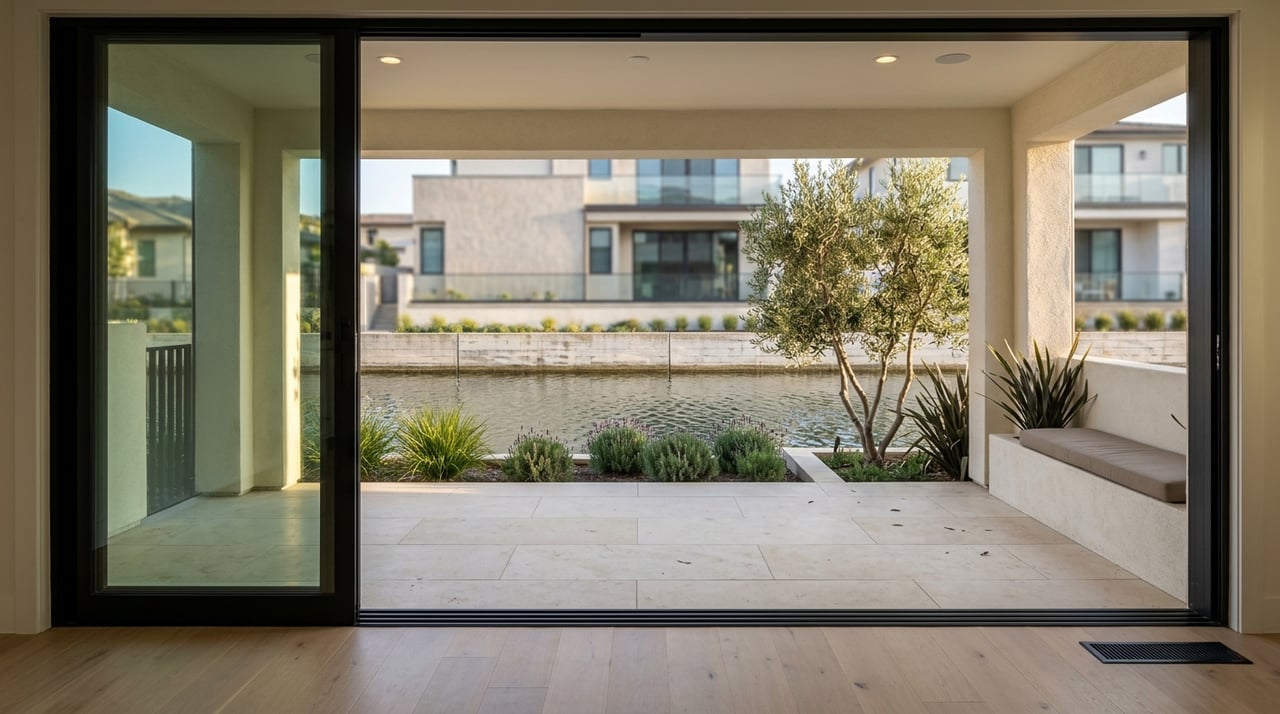
If you are deciding between a waterfront home and an inland home in Foster City, the choice is about much more than just the view. In this market, buyers often weigh lifestyle, HOA structure, maintenance, and day-to-day convenience just as closely as price. The good news is that Foster City makes this comparison especially clear because water and neighborhood design shape so much of how the city lives and functions. Let’s dive in.
Why this choice matters in Foster City
Foster City is not a typical Peninsula layout. According to the City of Foster City, the community was built around a 200-acre artificial lagoon that winds through the center of the city, with the Bay Trail tracing the outer edge and Highway 92 cutting across town toward the San Mateo-Hayward Bridge.
That design means waterfront and inland homes can offer very different daily experiences, even when they are only minutes apart. The city also notes that many neighborhoods were created as HOA-based micro-communities, so the trade-offs here often come down to the specific community as much as the address itself.
Foster City is also known for commuter convenience. The city highlights its location about 25 miles south of San Francisco, close to Silicon Valley, with commute-hour shuttle connections to Millbrae BART/Caltrain and Hillsdale Caltrain serving Foster City business areas.
Waterfront vs inland at a glance
At the highest level, waterfront homes in Foster City tend to appeal to buyers who want direct lagoon access, water views, and a more recreation-focused setting. Inland homes often appeal to buyers who want a more traditional neighborhood feel, flexible floor plans, and fewer water-edge maintenance concerns.
That said, there is no one-size-fits-all rule here. In Foster City, your experience depends heavily on property type, HOA setup, and how each neighborhood is designed.
Waterfront homes: what you are really buying
Waterfront living in Foster City centers on the lagoon lifestyle. The city says the lagoon system supports sailing, swimming, fishing, kayaking, paddleboarding, and windsurfing, with boats limited to 5 mph and no gas- or diesel-powered boats allowed.
For many buyers, that lifestyle is the main draw. Depending on the community, waterfront living may also come with amenities such as docks, clubhouses, pools, spas, beaches, and waterside walking paths.
A waterfront home can also feel more visually open. Even within attached-home communities, a water-facing location may offer a sense of space and a stronger connection to the outdoors that some buyers value highly.
Waterfront pros
- Direct lagoon access in some communities
- Water views and outdoor recreation potential
- Lifestyle amenities may include docks, pools, spas, and clubhouses
- Strong appeal for buyers who prioritize setting and experience
Waterfront considerations
- Exterior and shoreline-related upkeep may require more attention
- HOA dues can be significant in some communities
- Not every waterfront home has the same level of privacy, access, or amenities
- Price varies widely by property type, size, and condition
Inland homes: what they often offer
Inland homes in Foster City usually trade direct water access for a more conventional residential setting. Current inland listings highlighted by Redfin’s Foster City Town Center area examples emphasize features like courtyard entries, city views, flexible interior space, and proximity to parks and shopping.
That can be appealing if you want easier day-to-day living without the responsibilities that may come with a water-edge location. Inland homes may also feel more straightforward if your priorities center on layout, storage, parking, or access to nearby roads and services.
Still, inland does not automatically mean simpler ownership across the board. Many inland communities in Foster City are also part of HOA-governed neighborhoods, so you should always review dues, maintenance coverage, and community rules before drawing conclusions.
Inland pros
- More conventional neighborhood feel
- Often less emphasis on waterfront-specific upkeep
- Good fit for buyers focused on interior space and practical daily living
- Can still offer access to parks, shopping, and commute routes
Inland considerations
- No direct lagoon frontage or water-oriented amenities
- HOA dues and rules may still apply
- Some homes may trade views for convenience
- Lifestyle may feel less distinctive if waterfront recreation is a priority for you
Does waterfront always cost more?
No. That is one of the most important takeaways for Foster City buyers.
According to Redfin’s February 2026 city market report, Foster City remains competitive, with a median sale price of $1,548,750, homes selling in about 14 days, and an average sale-to-list ratio of 102.2%. But local examples show that waterfront does not guarantee a higher price than inland.
For example, a waterfront condo in Beach Park sold for $760,000, while a waterfront single-family home on Shearwater Isle sold for $2.717 million. By comparison, inland examples range from a townhome on E Court Lane listed at $1.1588 million to a detached Treasure Isle home on Comet Drive listed at $1.998 million, based on current and recent Foster City listing examples and Town Center area data.
The practical lesson is simple: waterfront is only one pricing factor. In Foster City, property type, square footage, condition, updates, lot position, and HOA structure can matter just as much.
HOA differences are community-specific
One common misconception is that waterfront homes always have HOAs while inland homes do not. In Foster City, that is not accurate.
The city maintains an official homeowners association prototype list, and it includes a mix of waterfront and non-waterfront communities. Waterfront names such as Harborside, Isle Cove, Lido Isle, Spinnaker Cove, and Whalers Island appear on that list, but inland and central neighborhoods may also have shared maintenance and monthly dues.
The details can vary a lot. One waterfront townhome example carried $502 per month in HOA dues with amenities such as pools, spa, clubhouse, tennis, and trails, while an inland Cityhomes West townhouse had $550 per month in dues covering items like exterior painting, insurance, roof, pool, spa, and common-area maintenance.
Some detached waterfront homes, by contrast, may have no HOA fee at all. That is why reviewing the specific community matters more than assuming the location tells the full story.
Flood and levee facts buyers should know
Flood risk is a major topic in Foster City, and it deserves a factual look. According to the city’s levee system information, Foster City’s levee is certified by FEMA as providing protection from the 1-percent annual chance base flood, which keeps land within city limits in Zone X and means mandatory flood insurance is not required.
The city also reports that levee improvements were completed in February 2024 to increase height and width and improve resilience against storm surge and projected sea-level rise through 2100. That is an important point for both waterfront and inland buyers because it affects the city as a whole, not just one neighborhood.
Even so, buyers should understand that not required is not the same as not worth considering. The city notes that FEMA still encourages property owners to consider flood insurance, so this is a good topic to review carefully during your due diligence.
Maintenance is often a bigger waterfront factor
If you are comparing ownership experience, maintenance may be one of the clearest differences.
The city explains that the lagoon system functions as a drainage detention basin, with water levels raised in mid-March and lowered in mid-November. The city also notes that algae can be more noticeable in summer and that property owners are responsible for maintaining lagoon or waterfront portions directly adjacent to or visible from the water or land.
That does not mean waterfront ownership is difficult. It does mean that you should go in with open eyes about landscaping, shoreline presentation, exterior exposure, and whether an HOA handles part of that work for you.
Inland ownership can feel more predictable in this area, especially if you prefer to avoid the extra questions that come with being on the lagoon. For some buyers, that simplicity is a real advantage.
Commute and convenience depend on the neighborhood
It is easy to assume waterfront means less convenient and inland means easier commuting. In Foster City, the reality is more nuanced.
Because the city is compact and connected to broader Peninsula commuting routes, the better way to think about it is this: waterfront living tends to feel more water-and-recreation oriented, while inland living often feels more road-and-transit oriented. The exact commute experience depends on your neighborhood, your work destination, and your access to Highway 92, local arterials, or the city’s transportation connections.
Which type of home fits you best?
A waterfront home in Foster City may be the better fit if you:
- Want lagoon views or direct water access
- Value kayaking, paddleboarding, or similar recreation
- Like the idea of community amenities tied to the waterfront
- Are comfortable evaluating HOA terms and maintenance responsibilities
An inland home may be the better fit if you:
- Want a more traditional residential setting
- Prioritize practical daily convenience over water access
- Prefer fewer waterfront-specific maintenance questions
- Are focused more on interior layout, flexibility, or price point
Final thoughts on Foster City homes
In Foster City, waterfront versus inland is not a simple luxury-versus-budget decision. It is really a choice between two different ways of living within the same planned Peninsula community, each with its own mix of setting, upkeep, amenities, and value.
The smartest move is to compare homes based on the full picture: location, property type, HOA structure, maintenance, and how you want to live day to day. If you are preparing to buy or sell in Foster City and want local guidance grounded in market nuance, connect with Watson Marshall Group for a thoughtful, high-touch approach.
FAQs
Do waterfront homes in Foster City always cost more than inland homes?
- No. In Foster City, a smaller waterfront condo can cost less than a larger inland detached home, so price depends on property type, size, condition, and HOA structure as much as location.
Do waterfront homes in Foster City always have HOA dues?
- No. Some waterfront condos and townhomes have HOA dues, but some detached waterfront homes may not, so you need to review the specific property and community.
Is flood insurance required for homes in Foster City?
- According to the City of Foster City, land within city limits is in Zone X because of the certified levee system, so mandatory flood insurance is not required citywide.
What is the main lifestyle difference between waterfront and inland homes in Foster City?
- Waterfront homes are generally associated with lagoon access, views, and water recreation, while inland homes often emphasize more conventional neighborhood living and fewer water-edge maintenance concerns.
Are inland homes in Foster City free from HOA rules?
- No. Many inland neighborhoods in Foster City are also HOA-based communities, so inland does not automatically mean no dues or no shared rules.